|
The
rate of conception for a couple is approximately 20% per cycle.
However, due to many factors which may impair fertility, one out
of every six couples attempting to achieve a pregnancy will experience
difficulty. Our objective is to provide the best medical evaluation
and therapy available in order to achieve a pregnancy in a minimal
amount of time.
Ovulation
Disorders
Ovulation disorders may be broken down into three distinct categories.
The first, anovulation, is when a woman does not ovulate at all.
Ovulation inducing drugs, (also known as "fertility drugs")
are used to correct anovulation. The most commonly prescribed are
Clomid (clomiphene citrate) or Serophone, an orally administered
compound used to stimulate the release of pituitary gonadotropins
to mediate ovulation. We also use injectable medications comprised
of luteinizing hormone (LH) and follicle stimulating hormone (FSH),
also known as human menopausal gonadotropins (hMG), prescribed as
Pergonal and Humegon. A similar injectable drug, Metrodin, which
is pure FSH minus the LH, is used in similar circumstances as hMG.
Its clinical application is to stimulate ovarian follicle growth
and maturation. The third fertility drug which would be prescribed,
in cases where the serum prolactin level is elevated, would be bromocriptine.
Another
type of ovulatory problem is a luteal phase defect. There are two
kinds of luteal phase defects, the first, referred to as a pure
luteal phase defect, in which there is insufficient production of
the hormone progesterone, but the follicle (the sac containing the
egg) is mature. Progesterone is needed to build up the uterine lining,
to enable the embryo to implant. To determine a progesterone deficiency
an endometrial biopsy is performed, a simple procedure done in the
office where a small sample of endometrial (uterine) tissue is obtained
with a plastic pipette. Supplementation of progesterone during the
luteal phase of the menstrual cycle (after ovulation) may be given.
Information regarding the benefits of progesterone and the options
for treatment will be provided to patients in order that they may
select the treatment option that best suits their physical comfort
and financial affordability.
Another
type of luteal phase defect is known as immature follicles. This
is determined by inadequate serum estradiol levels, less than 200
pg/mL, and or follicles size less than 18mm on ultrasound, both
studies being performed at mid-cycle when follicular maturation
occurs. Ovulation inducing drugs, as previously described, are used
to correct these defects. The medication used is chosen after careful
monitoring with blood levels and ultrasound. Each drug has its advantages
and disadvantages. Clomiphene citrate is a less expensive ovulation
inducing drug, but may sometimes interfere with the production of
cervical mucus (causing what is known as cervical factor-for a more
detailed description see cervical factor below). Although more costly,
hMG in some cases is more effective in promoting follicular maturation.
The decision of which drug to employ is made after careful evaluation
and consultation with your physician.
Another
ovulation disorder is known as premature luteinization, when the
production of progesterone occurs prematurely, that is before ovulation
has taken place. Referred to medically as the follicle undergoing
"atresia", it causes the egg to die and destroys the cervical
mucus needed to aid in transporting the sperm through the cervix.
Once again, an ovulation inducing drug may be used to insure ovulation
has taken place before the rise in progesterone. Frequently, this
may be corrected by first blocking the woman's LH through the use
of high-dose estrogen or a drug known as a gonadotropin releasing
hormone agents (GnRHa) which suppresses LH and FSH. Examples include
leuprolide acetate (Lupron) or nafarelin (Synarel). These drugs
would be followed by either Pergonal, Humegon or Metrodin.
-
return to the top -
Cervical
Factor
Cervical factor, or inadequate quality or quantity of cervical mucus
is determined by performing a simple test known as the post-coital
test (PCT). This is done by aspirating some of the mucus with a
small syringe and microscopically examining it for the presence
of sperm. The couple would have been requested to have intercourse
8-12 hours (up to 24 hrs) prior to the PCT. The optimal quality
mucus should be present immediately preceding ovulation. This test
is also performed in conjunction with blood and ultrasound monitoring
of follicular maturation. In treating mucus problems, the simplest
approaches would be taken initially, such as the use of guaifenesin
(or a pill form of the same), an expectorant which stimulates your
mucus glands to help make thinner more abundant cervical mucus.
If that alone is ineffective, a short course of estrogen may be
given, in addition to the Robitussin, once the follicle is mature.
Although this would provide maximal stimulation of the mucus glands,
the estrogen at the same time may suppress the ovaries, in which
case the following cycle it may be necessary to move on to hMG which
would allow the estrogen to work on the cervical mucus while the
hMG acts to stimulate ovulation. The sperm itself and/or the mucus
should be also checked for antisperm antibodies.
Another
therapy to overcome inadequate or "hostile" cervical mucus
would be intrauterine insemination (IUI), a procedure which involves
placing the sperm (after it has undergone a critical "cleansing"
procedure known as sperm washing), directly into the uterus, thus
bypassing the cervix altogether. Also, in vitro fertilization (IVF)
is another option (see IVF below for details).
-
return to the top -
Male
Factor
It is important for couples to realize that fertility potential
involves both partners. Therefore, it is beneficial when performing
a complete work-up for infertility to evaluate both partners. A
semen analysis should be performed, along with some blood hormone
levels on the male. Initial work-up of the male includes the following
tests on the semen specimen: count-number of sperm per mL of semen,
motility-percent of sperm moving, grade of progression-how
the sperm are moving, viability-percent of sperm alive, morphology-percent
of sperm with acceptable physical characteristics, antisperm
antibody (ASA)-percent immunoglobulins attached to sperm, and
hypo-osmotic swelling (HOS) test-assess the functional integrity
of the sperm membrane.
Other
tests performed include the sperm penetration assay (SPA)-percent
of sperm that can penetrate a zona free hamster egg and acrosome
reaction-measurement of the ability of the sperm to undergo
changes necessary for binding and fertilization of an egg.
We
also provide services to increase the likelihood of a male or female
offspring by selecting out a higher concentration of X and Y sperm
and then inseminating. This process does not damage the sperm in
any way.
-
return to the top -
Mechanical
Factor
To determine whether or not the fallopian tubes are patent (open),
one of two procedures is performed. The first, and simpler one,
a hysterosalpingogram (HSG) is performed after menses, but before
ovulation. This test is done by a physician as an outpatient procedure.
Dye is introduced into the uterus and its passage through the uterus
and fallopian tubes is visually followed with the use of a fluoroscope
to determine whether there is free flow of the dye, or tubal occlusion
(blockage).
This
procedure may also determine the presence of any uterine anomaly.
The HSG is a relatively easy procedure, the only real drawback is
that some women may experience cramping, but that can be decreased
considerably by taking ibuprofen prior to administering the test.
There are times when the test itself seems to help a woman achieve
a pregnancy.
A second,
more definitive diagnostic procedure is the laparoscopy. This is
a surgical procedure performed in the hospital with the use of anesthesia.
By inserting a "scope" through the navel, thus gaining
full visualization of the pelvis, it allows the physician to see
the presence of endometriosis and or adhesions, as well as tubal
patency. An advantage of this procedure is that endometriosis and
adhesions can be treated through the laparoscope.
If
tubal occlusion is determined, in vitro fertilization-embryo transfer
(IVF-ET) is usually performed because of its high success rate.
(see Assisted Reproductive Techniques below for complete description
of this procedure). Though a surgical procedure known as tubal reanastomosis
by microsurgery can also be performed, it is usually best reserved
for certain cases of previous tubal ligation; blockage due to infection
has a low success rate following surgery and a high risk of tubal
pregnancy.
-
return to the top -
Endometriosis
Endometriosis is a disease in which tissue from the lining of the
uterus implants itself on either the ovaries or other pelvic organs.
This can only be positively diagnosed laparoscopically. Elevation
of serum CA-125 levels has been noted in patients with endometriosis.
Routine measurement of CA-125 levels in women with infertility is
performed as part of the initial blood screen.
Treatments
for endometriosis include laparoscopic vaporization or burning of
endometriotic implants, or, the use of one of several drugs now
available which may help the pain often associated with endometriosis.
These drugs include Norlutin, Danazol, Depo-Provera, Ovral or low
Ovral, Provera Oral, or estrogen suppression by GNRHa-Depo-leuprolide
acetate (1x/month), or Nafarelin nasal spray (1x/day), although there
is no evidence that they improve fertility.
-
return to the top -
Unexplained
Infertility
Unexplained infertility can be treated in several ways. If a male
factor is suspected, either IUI or IVF may be performed. IVF may
be effective in the presence of a tubal ovum pick-up problem, despite
the appearance of normal fallopian tubes. In vitro fertilization
can be used to determine if either the sperm or egg are not able
to cause fertilization; subsequently the shared oocyte system (where
IVF is free for sharing of oocytes) may help determine if the sperm
or oocyte is defective.
-
return to the top -
Assisted
Reproductive Techniques
Our in vitro fertilization (IVF) program began in 1988, then known
as Endocrine Histology. After expanding our practice in November
1991 by opening an office in Marlton, NJ, in an effort to increase
efficiency and avoid any duplication, the decision was made to merge
our PA and NJ programs to one location, which is now known as the
Cooper Institute for Reproductive Hormonal Disorders, P.C. (located in our Marlton,
NJ office).
We
are members of The Society for Assisted Reproductive Technology
(known as SART), a national registry for IVF centers. SART's function
is to set guidelines and monitor procedures and pregnancy rates
of its members in this rapidly growing arm in the field of Reproductive
Medicine. We perform approximately 1000 oocyte retrievals and 800
embryo transfers annually and thus are the largest IVF center in
the Delaware Valley and one of the five largest in the country.
Our
staff of physicians, nurses, embryologists and andrologists, are
all trained in state of the art procedures in IVF. In addition to
transvaginal oocyte retrieval and embryo transfer, we offer other
procedures which include GIFT (gamete intrafollopian transfer),
TET (tubal embryo transfer), ZIFT (zygote intrafallopian transfer,
(zygote refers to the fertilized egg before cell division begins).
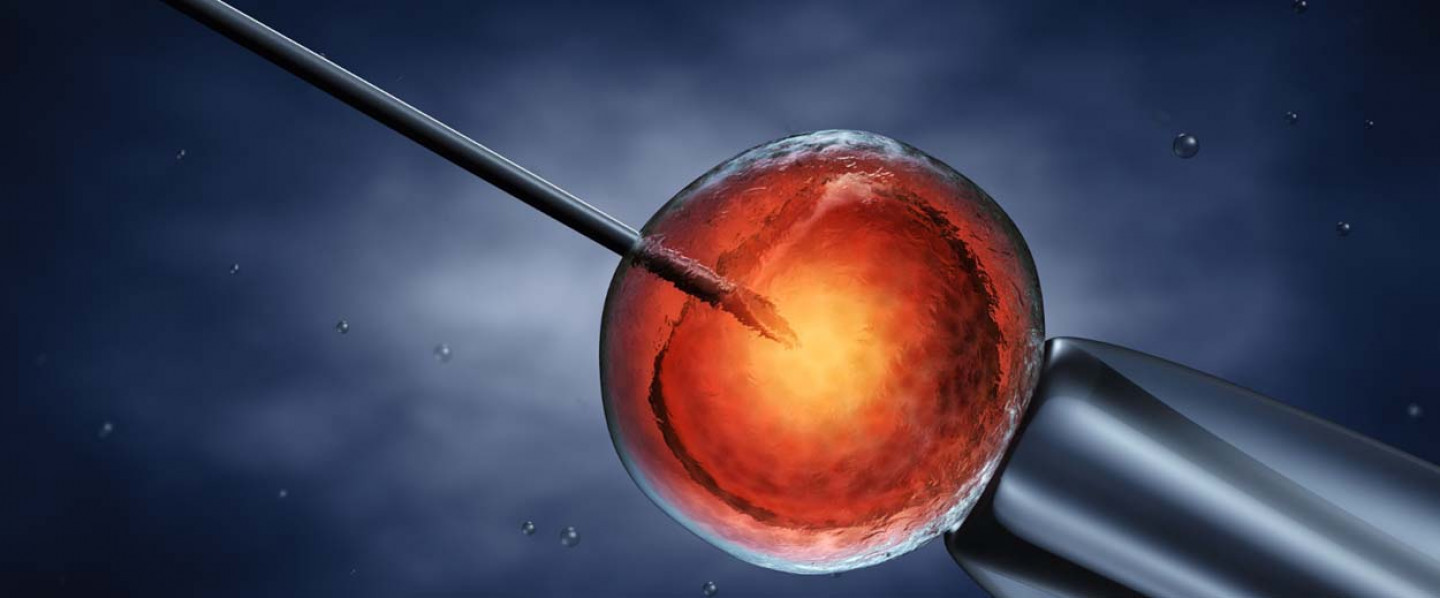
we also use micromanipulation techniques such as ICSI (intracytoplasmic
sperm injection ) and assisted embryo hatching. This involves measuring
the thickness of the zona pellucida of the embryo, and if greater
than 13 microns, the embryologist skillfully creates a small hole
in the zona to assist the embryo to hatch and thus implant. Each
case is carefully monitored and evaluated to determine the best
therapy for each patient, each cycle.
In
the event that more embryos are available than can be transferred
back into the uterus in one given cycle (for fear of multiple births),
we have a cryopreservation program for freezing of both sperm and
embryos. Cryopreserved embryos can be placed back into the uterus
during a "transfer" cycle. A transfer cycle is a much
less complicated process in terms of medications and procedure,
and also much less in terms of cost. Our pregnancy rate resulting
from frozen embryo transfer does not differ much from the rate of
success using fresh embryos. In fact we have the most successful
cryopreservation program in the Delaware Valley and quite possibly
in the country.
It
is our intent to make the IVF process available to as many people
as possible, therefore we make a concerted effort to maintain reasonable
and affordable prices for the retrieval, embryo development, and
embryo transfer. By having a successful cryopreservation program,
frequently from one retrieval of eggs, you can get one to four more
cycles of embryo transfer without being stimulated to make multiple
eggs and without undergoing the retrieval process. For those patients
with significantly limited funds, we have a Donor Oocyte Program,
whereby the patient is willing to share oocytes with another couple.
The cost of the IVF cycle for the donor is covered by the recipient
and the medication is provided. Additional information for IVF patients,
including current costs, is provided in our IVF booklet.
-
return to the top -
Insurance
Various insurance plans are accepted by our practice. These include
many major managed care plans and HMO plans, as well as indemnity
(private) insurance plans. When calling for an appointment someone
can advise you if your particular insurance plan is one our group
participates in or accepts. For more specific insurance and billing
questions please contact our billing department at 1 (800) 752-1086
or by e-mail at billing@ccivf.com.
There
are differences in coverage, within the same insurance company,
depending on the plan offered to you by your employer. For this
reason you should contact your Employee Benefits Department of call
Member Services at the insurance company. You would need to know
what is covered and whether there are any time or cost limitations,
and any or all exclusions.
Our
experienced and knowledgeable staff stands ready to assist you with
your questions and claims. Our practice is committed to your clinical,
emotional, and financial well being. Our fees compare most favorably
to others who provide the same services.
-
return to the top -
Research
In addition to the clinical services described herein, we have established,
within our practice, a research department whose staff is devoted
to the collection and analysis of data, for the purpose of determining
the most effective therapies and treatment modalities within our
field.
The
research team, headed by Dr. Check,
reports its scientific findings throughout the world via slide and
poster presentations at international meetings and symposia, as
well as publications in scientific books and journals. Most importantly,
our findings are applied right here in our own practice so that
we can offer the most effective approach and treatments for the
various factors that play a role in establishing and maintaining
a healthy pregnancy. In fact, our group has published over 500 manuscripts
in peer review journals, mostly dealing with new methods of diagnosing
and treating infertility; thus, in addition to the teaching of medical
students and OB/GYN residents at Robert Wood Johnson Medical School
and Camden, our publications help physicians around the world to
improve treatment of their patients.
The
department is comprised of a full-time staff of clinical and administrative
personnel. Some of our physicians, nurses and technologists also
contribute to the time consuming task of collecting and evaluating
data. Our research is part of what makes us a unique center and
contributes greatly to our ability to offer state of the art medicine.
Because
we like to provide our patients with as much information as possible,
we do make available pamphlets and booklets from outside sources.
However, we do not necessarily always endorse all the treatments
and therapies described therein.
-
return to the top -
|